Showing posts with label environmentalism. Show all posts
Showing posts with label environmentalism. Show all posts
Saturday, January 23, 2016
Movie Review: * Norm from the North (2016)
Tony and I visited the theater this last weekend to check out this movie. Tony loved it, and I was a bit disappointed with it. Too much potty humor for me. Who knew Lemmings could pee so much and for so long. I guess they needed long pees to milk the crowd for more laughs but I must admit it didn't work with me. This seemed to be a propaganda piece about the environment geared to elementary school age kids. Such movies really disturb me. However there was something there about saving grandfather which was pretty cool. When getting home my wife liked how the movie was. I gave it a D, My son a B, not even potty humor could save this dribble.

Thursday, June 4, 2015
John Denver Windstar symposium 1995
This concert, conference would have been a joy to attend. This is an environmentalist conference, with talk of caring for planet earth. However it also includes John Denver as well as Dan Fogelberg performing. The Colorado Mountains would have been buzzing this night.
Friday, October 11, 2013
Book Review: San Joaquin: A River Betrayed
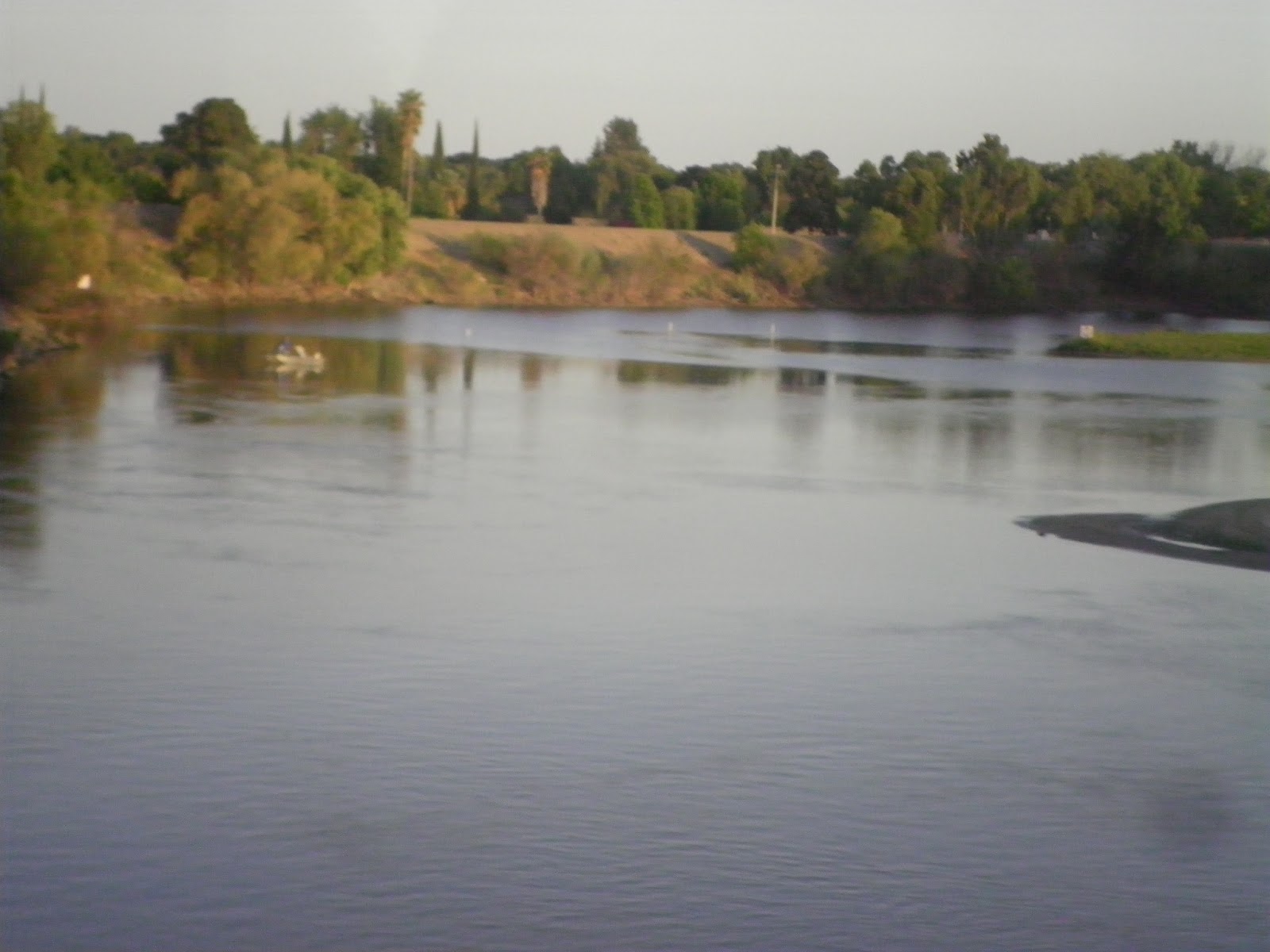
This book is an interesting read, with a historical and environmental bent. I checked it out at the Manteca Library. It is written by Gene Rose and was published in 1992 by Linrose Publishing, Fresno, CA. It is available online at Google Books. I was worried this was just going to be some environmental wacko book, but in fact I really enjoyed it. Maybe I am more an environmentalist wacko than I admit. I like to call myself a conservationist; after all, I did earn my Conservation of Natural Resources Merit badge. (I don't know if they still have that one.)
This book included enough history to keep it interesting. It did go off on its environmental soap opera a few times, and using its labels of others like I use the label wacko, "Greedy, selfish, etc." It was published in 1992, and left me wanting more of the story, the story of the last 20 years. Maybe I got some from the news a couple years ago when farmers were starving for water and had fields unplanted. This may be a response to this book, as the river passing by Manteca looks very vibrant. In fact it was flooding earlier this year. But the contention of the book is that the river is diverted up stream; 95 percent of the water is run through irrigation, and the run off is overly polluted with chemicals and run off from the natural minerals in the ground. Selenium occurs naturally in the western side of the Valley. This has resulted in a toxic river and irrigation system downstream and salts and minerals being overly applied to fields. Most notably the Kesterson Reservoir, where the runoff waters were accumulated, became a dead reservoir, casing bird and animal deformities. Some of the water is put back into the river, causing higher levels of minerals there as well.
The most interesting part of the book is the history. It starts with the Native populations, who used the tulle reeds which were supported by the river. They made canoes and baskets from the tulle. The river supported their lifestyle. It talked of Jedediah Smith who hunted beaver in the valley. Of Smith he said, "Some historians have speculated that Smith first discovered gold during his 1827 trip when he was exploring and trapping along the Stanislaus River." (p 19) The book informs us that only Smith knew where the gold was, that they didn't have proper equipment to extract the gold, and that he went East to obtain this. However on his way back to California, he was killed by Indians along the Santa Fe Trail. It is interesting to note the supposed location of the find, "...near the confluence of the Stanislaus and San Joaquin rivers--although the geology of that area does not support a known gold bearing lode." (p 20) (Let me note that this is within five miles of our current home. I was talking to the docents at the history museum today who said it is possible for gold to travel that far, washing down from the lodes higher up, especially in wet years.)
reason, they soon established a community, New Hope, in the wilds of the valley.
Also close to this confluence is the community established by Mormons. "A group of Mormon settlers forced their way up from the San Francisco Bay in a small boat rigged with sails form the larger "Brooklyn." Led by Sam Brannan, the group made their way up the San Joaquin channel to the Stanislaus River. About a mile above the confluence, they went ashore. Putting hope and prayer before reason, they soon established a community, New Hope, in the wilds of the valley. A barn, sawmill and a collection of shelters were built. Others began tilling the virgin soil; planting wheat and other crops in preparation for the arrival of their spiritual leader Brigham Young, along with other members who were fleeing religious persecution of Nauvoo, Illinois. Next, the settlers turned to the construction a small sailing craft, the "San Joaquin"--the first known bot to be built along the river. But something went wrong. Somewhere along the line, the Saints' revered leader, Young, failed to arrive at new Hope. Puzzled by this incident, Brannan then made his was to Salt Lake City, only to find Young committed to the Utah location. Despite his appeals, Brannan was unable to sway the church's elder and he returned to New Hope discouraged and dismayed. Gradually dissension set in and the members of the colony began drifting away. Today, New Hope remains on a facing enigma, its fate and precise location unknown."
The author also mentions the Mormons when talking about navigation on the San Joaquin River. "No craft of man had rippled its waters save the rude balsas and tule rafts of the Indians, till one day in 1846 the nose of a little schooner worked its way up the crooked channel of the Suison bay to the mouth of the Stanislaus. This Mormon boat was he first to which the San Joaquin submitted..."
A couple corrections to the account should be made. The Mormon's did not land one mile up the Stanislaus, but four miles before the confluence at Moss landing. The traveled the last few miles overland. Sam Brannan did not meet Brigham Young at Salt Lake City, but at Fort Laramie while the Mormons were enroute to Salt Lake. They had not yet seen the valley.
This book is worth reading. It does have a few grammatical errors, but they can be easily over looked for the content, and the story of the river. Of course there are many more stories than those I shared; the story of gold, of hunting, fishing, irrigating, ranching and of manufacture, etc. The story of the high country and hydro electric power, and that of John Muir. They all belong to this valley.
Sunday, August 4, 2013
Movie Review: **^ Yogi Bear

Yogi Bear was fun as well. It pit the ranger and Yogi Bear and Boo Boo against the mayor and the logging company. After Yogi ruins everything with his water skiing accident which accidentally sets fire to the fireworks display, he saves the day in the end. The endangered frog-mouthed turtle was a best friend of Tony, and Tony was rooting for him to be OK. However, other than the antics of Yogi and Boo Boo, this movie was fairly predictable in its good guy environmentalist, bad guy logger theme.
Subscribe to:
Posts (Atom)